
 By
By 
The terms “security camera” and “surveillance camera” are often used interchangeably, and their meanings can overlap. However, there are subtle differences in their connotations:
What is Security Camera?
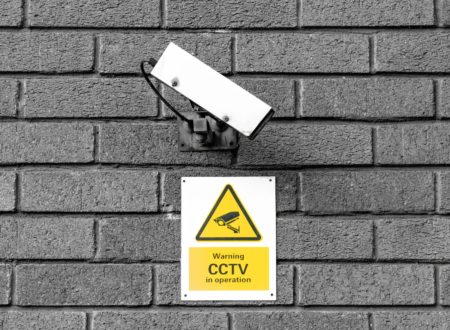
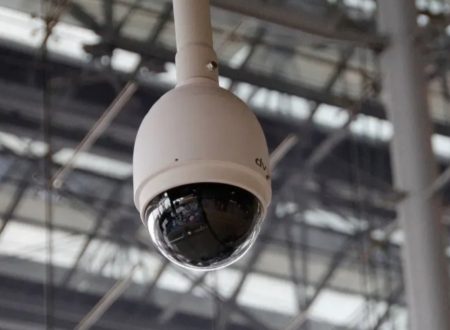
A security camera, also known as a closed-circuit television (CCTV) camera, is a device used to capture and record video footage in a specific area for security and surveillance purposes. These cameras are a crucial component of security systems and are employed in various settings to monitor and enhance security.
Key features of security cameras include:
Video Capture: Security cameras are equipped with lenses and sensors that capture video footage of the monitored area. The quality of the video, resolution, and field of view can vary depending on the camera’s specifications.
Recording: Security cameras can record the captured video footage onto storage devices such as digital video recorders (DVRs) or network video recorders (NVRs). This recorded data can be used for later review, analysis, or as evidence in the event of security incidents.
Monitoring: Security cameras can provide real-time monitoring of a location, allowing security personnel or property owners to observe activities as they happen. This can be done on-site or remotely through the use of network-connected cameras.
Deterrence: The presence of visible security cameras can act as a deterrent to potential criminals or intruders, as they are aware that their actions are being recorded. This deterrent effect is often considered a preventive measure against security threats.
Integration: Security cameras are often integrated into broader security systems, which may include alarms, access control systems, and other security measures. Integration allows for a comprehensive approach to security management.
Types: There are various types of security cameras designed for different applications, including indoor cameras, outdoor cameras, dome cameras, bullet cameras, and pan-tilt-zoom (PTZ) cameras. Each type has specific features suited to its intended purpose.
Security cameras find applications in a range of settings, including homes, businesses, public spaces, government facilities, and critical infrastructure. They play a crucial role in deterring and responding to security threats, enhancing overall safety and providing a means for monitoring and investigating incidents.
What is Surveillance Camera?
A surveillance camera is a general term referring to any camera system used for monitoring and observing activities in a specific area. The term is broad and can encompass various types of cameras employed for different purposes beyond security. While security cameras are a subset of surveillance cameras, the latter can be used in contexts beyond security and can serve diverse applications. Here are some key points about surveillance cameras:
Diverse Applications: Surveillance cameras can be used for purposes other than security. They may be employed for traffic monitoring, wildlife observation, scientific research, or general observation in public spaces.
Public Spaces: Surveillance cameras are commonly installed in public areas, transportation hubs, retail stores, and other locations to monitor and manage crowds, enhance public safety, and assist in incident investigation.
Research and Observation: In scientific and research contexts, surveillance cameras are used to observe natural habitats, study animal behavior, monitor environmental changes, or conduct experiments that require visual documentation.
Traffic Management: Cameras installed on roads and highways are often considered surveillance cameras. They are used for traffic monitoring, enforcing traffic rules, and managing congestion.
Industrial and Commercial Use: Surveillance cameras are used in industrial settings for monitoring manufacturing processes, ensuring workplace safety, and improving efficiency. In commercial environments, they may be used for inventory management and quality control.
Public and Private Sectors: Both public and private sectors utilize surveillance cameras, with applications ranging from city-wide monitoring for public safety to internal surveillance within private facilities.
It’s important to note that the terms “surveillance camera” and “security camera” are sometimes used interchangeably, and the distinction can be context-dependent. In many cases, the specific features and applications of a camera system determine whether it is primarily considered a security camera or a surveillance camera. Security cameras, as a subset of surveillance cameras, are specifically designed and optimized for security and safety purposes.
Security Camera
- A security camera is a broad term that refers to a camera system designed to monitor and record activities in a specific area for security purposes.
- Security cameras can be part of a larger security system, including alarms, access control, and other security measures.
- The primary goal of a security camera is to deter, monitor, and record potential security threats or incidents.
Surveillance Camera
- A surveillance camera is a more general term that encompasses any camera used for surveillance, whether it is for security purposes, monitoring public spaces, traffic surveillance, or other applications.
- Surveillance cameras may not always be directly associated with security measures and may serve various purposes, such as traffic monitoring, wildlife observation, or research.
Security camera vs Surveillance camera
Here’s a table outlining the key distinctions between security cameras and surveillance cameras:
| Feature | Security Camera | Surveillance Camera |
|---|---|---|
| Primary Purpose | Focuses on security and safety applications. | General term encompassing various monitoring uses. |
| Application | Used to deter, monitor, and record security threats. | Can be used for security as well as non-security applications (traffic monitoring, research, etc.). |
| Context | Often part of comprehensive security systems. | Used in diverse contexts beyond security. |
| Deterrence | Presence serves as a deterrent to potential threats. | May or may not have a deterrence factor. |
| Integration | Integrated into broader security systems. | Can be standalone or integrated, depending on use. |
| Visibility | Visible presence is often emphasized. | May or may not be prominently visible. |
| Settings | Commonly found in homes, businesses, and public areas. | Used in public spaces, industrial settings, research, etc. |
| Design Types | Various types, including dome, bullet, PTZ, etc. | Diverse types depending on the intended application. |
| Use Cases | Focuses on protecting against security threats. | Used for security, monitoring, research, and more. |
It’s important to note that the terms are often used interchangeably, and the specific features and applications of a camera system can vary. The distinctions outlined in the table provide a general overview, but the interpretation may depend on industry practices and individual preferences.