
 By
By 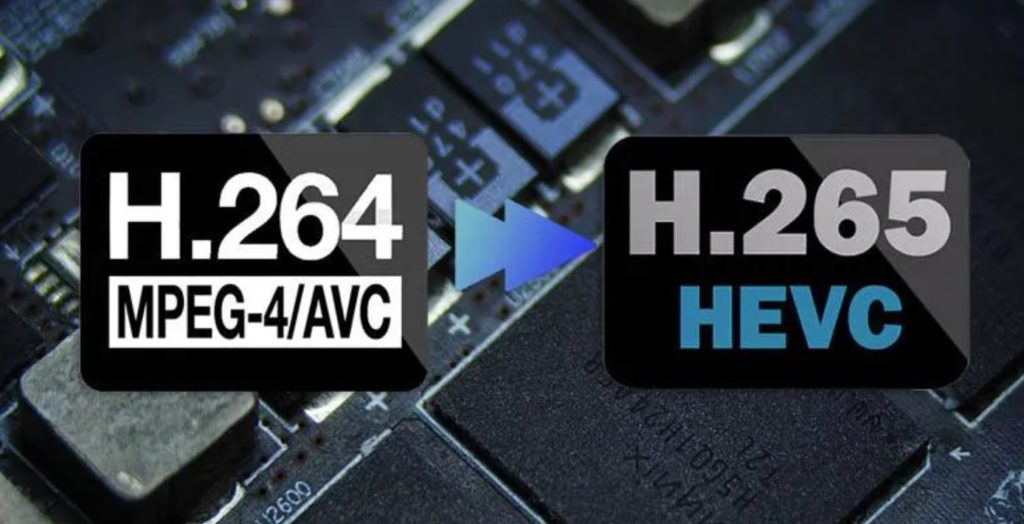
Security Cameras and Recording Devices all have one thing in common. They all record or transmit video to each other one way or another and they need a certain kind of technology in order to do so. The technology allowing us to use hard drives or SD cards to record video is called video compression. Common video compression rates used in mainstream video are technologies called H.264 or H.265. The benefits of these technologies allow us to use smaller hard drives/SD cards but still maintain an adequate amount of storage time to go back and review them later.
We are going to dive into both technologies, compare the two, and see if it is really worth the upgrade in cost. H.264 or MPEG-4, is a video compression standard that has been widely adopted by almost every single industry since its inception in 2014. Major video formats like YouTube, Vimeo, and even your Blu-ray discs have adopted this compression rate as the “norm” and it has worked flawlessly, up until now. H.264 still works flawlessly to this day (2018), but with newer technology coming out each and every day, H.264 is bound to be replaced with a newer, and better compression technology. This is where H.265 comes into play.
It’s important to note that the choice between H.264 and H.265 depends on various factors, including the specific use case, device compatibility, available network bandwidth, and the desired balance between video quality and compression efficiency.
Here’s a table summarizing the key differences between H.264 (AVC) and H.265 (HEVC):
| Feature | H.264 (AVC) | H.265 (HEVC) |
|---|---|---|
| Compression Efficiency | – Good compression for its time. | – Improved compression efficiency. |
| – Standard for HD video. | – Better video quality at lower bitrates. | |
| Resolution Support | – Standard support for HD resolutions. | – Optimized for higher resolutions, including 8K UHD. |
| Bitrate Reduction | – Can achieve high-quality video at | – Lower bitrates for equivalent quality. |
| moderate to high bitrates. | ||
| Parallel Processing | – Less optimized for parallel processing. | – Enhanced parallel processing for efficient hardware implementations. |
| Bitrate Control | – Basic bitrate control tools. | – Improved tools for bitrate control, better suited for adaptive streaming. |
| Applications | – Widely used in various applications, | – Increasing adoption in applications requiring higher efficiency, such as 8K video, streaming, and broadcasting. |
| including streaming, broadcasting, | ||
| video conferencing, and more. | ||
| Resource Requirements | – Generally requires less computational | – May require more computational resources for encoding and decoding. |
| resources for encoding and decoding. | ||
| Compatibility | – Broad device and platform support. | – Growing support but not as universally compatible as H.264. |
| Industry Adoption | – Established and widely adopted. | – Increasing adoption, especially for high-resolution content. |
| Current Prevalence | – Still widely used. | – Increasingly used in newer applications and services. |
What is H.264 Compression?
Most Security Cameras on the market today are utilizing the H.264 compression rate. Major Security camera brands like Oculur and Axis have adopted the H.264 compression rate across the board implementing the technology into all of their cameras. This allows them to record more video with less storage which saves the customer money and storage space. In the table below, we provide a test scenario showing you how long a camera can record for using the H.264 compression rate. Later on, we will give you the same scenario but using H.265 instead.
H.264, also known as AVC (Advanced Video Coding), is a widely used video compression standard designed for efficient video compression and delivery. It was developed by the ITU-T Video Coding Experts Group (VCEG) and the ISO/IEC Moving Picture Experts Group (MPEG). H.264 is commonly used for compressing and transmitting video content over various networks, including the internet, satellite, cable, and other broadcasting systems.
Key features of H.264 compression:
High Compression Efficiency: H.264 is known for its high compression efficiency, meaning it can significantly reduce the amount of data required to represent video content while maintaining relatively good quality. This is crucial for streaming and broadcasting applications where bandwidth is often limited.
Broad Compatibility: H.264 is widely supported by various devices and platforms, making it a versatile standard for video compression. It is compatible with a range of devices, including computers, smartphones, tablets, smart TVs, and more.
Adaptive Bitrate Streaming: H.264 supports adaptive bitrate streaming, allowing video content to be streamed at different quality levels based on the available network bandwidth. This is important for delivering a smooth viewing experience, especially in variable network conditions.
Wide Range of Applications: H.264 is used in various applications, such as video conferencing, video surveillance, digital television broadcasting, streaming services (e.g., YouTube, Netflix), and more.
Support for High Definition (HD) and 4K Video: H.264 is capable of compressing high-resolution video, including HD (High Definition) and 4K content. This makes it suitable for delivering high-quality video in modern media consumption.
What is H.265 Compression?
H.265 has become known to be the compression of the future. It is very new and hasn’t been implemented into many products yet, but it has been introduced into some of the newer IP security cameras on the market. H.265 is a newer compression technology that encodes the video to an even smaller file size. This means you are able to record video and save 50% more video compared to H.264. Encoding technologies like this truly begin to break barriers when it comes to storage management. These technologies can especially be helpful when being used in massive projects that need a extremely large amount of storage. For example, where it is legal, marijuana farms have strict requirements when it comes to the amount of storage they have to keep on file. In some states, they are required to keep up to 6 months of video, recording at 24 hours a day, 7 days a wee. That is an EXTREMELY large amount of storage and is only possible with encoding technologies like H.265. In the table below, we provide the results of a test scenario showing how long the camera can record for using the H.265 compression rate. You can compare these results to the H.264 compression results above and see the difference between the two.

Comparing both of these compression rates, it is clear where the industry is heading, but we don’t want to discourage you from getting anything using H.264. Both of these compression rates do a great Job of saving you money and storage space and we encourage the industry leaders to continue implementing these new technologies. H.265 is clearly the future of security cameras, but one day, we will develop another compression rate that even beats that! This is both the Beauty and the downfall of technology. We know we will get there one day, we just know it is going to take some time and innovation.
Video compression technology tends to see leaps and bounds in advancements. MPEG-2 video encoding standard (H.262) carried us through the 1990s, Advanced Video Coding (AVC, H.264) arrived in the mid-2000s, and now we are seeing High Efficiency Video Coding (HVEC), more commonly known as its codec H.265.
Key features of H.265 compression
Improved Compression Efficiency: H.265 achieves higher compression efficiency compared to H.264, meaning it can provide better video quality at lower bitrates. This is particularly beneficial for streaming high-resolution content, including Ultra High Definition (UHD) and 4K video.
Reduced Bitrate for Equivalent Quality: H.265 can deliver the same video quality as H.264 but with a lower bitrate, which is advantageous for applications with bandwidth constraints, such as streaming over the internet or broadcasting.
Support for Higher Resolutions: H.265 is designed to support higher resolutions and frame rates, making it suitable for emerging video technologies, including 8K UHD (Ultra High Definition) and beyond.
Enhanced Parallel Processing: H.265 is optimized for parallel processing, allowing for more efficient hardware implementations and improved performance on modern processors and graphics processing units (GPUs).
Flexible Bitrate Control: H.265 includes improved tools for bitrate control and adaptive streaming, providing better support for adaptive bitrate streaming scenarios where the available network bandwidth may vary.
Wide Range of Applications: Similar to H.264, H.265 is used in various applications, including video streaming services, video conferencing, digital television broadcasting, surveillance systems, and more.


If you have any questions regarding the two compression technologies we discussed in this article, please feel free to give us a call at 214-948-1300 or send us an email at sales@a1securitycameras.com. One of our security experts would be happy to go over the two technologies with you, pick which device is best for you, and choose compatible components to ensure they will work properly together.